EXPLORE YOUR STYLE
Clothing for Body Shape: Outfit Guide
Use body proportions to ask better clothing questions. Start with comfort, the outline you enjoy and the areas where garments pull or gap, then explore the relevant guide.
Start analysisChoose the clothing effect before a body label
Clothing for body shape is most useful when it solves a specific question: where a waistband sits, how a jacket hangs, or whether a skirt allows you to move. Shape categories loosely describe relative widths; they are not health categories, sizes or rules about what you may wear.
Shoulder, waist and hip relationships can overlap several labels. A fitted measuring result and a clothed photograph can also describe different things. You can work directly with the garment without settling a category.
Three outfit structures to compare
Compare a clear waist break, a straighter outline and an open layer in the outfit examples. Use the photos to explore garment proportions, then check fit on your own body.
A clear waist break
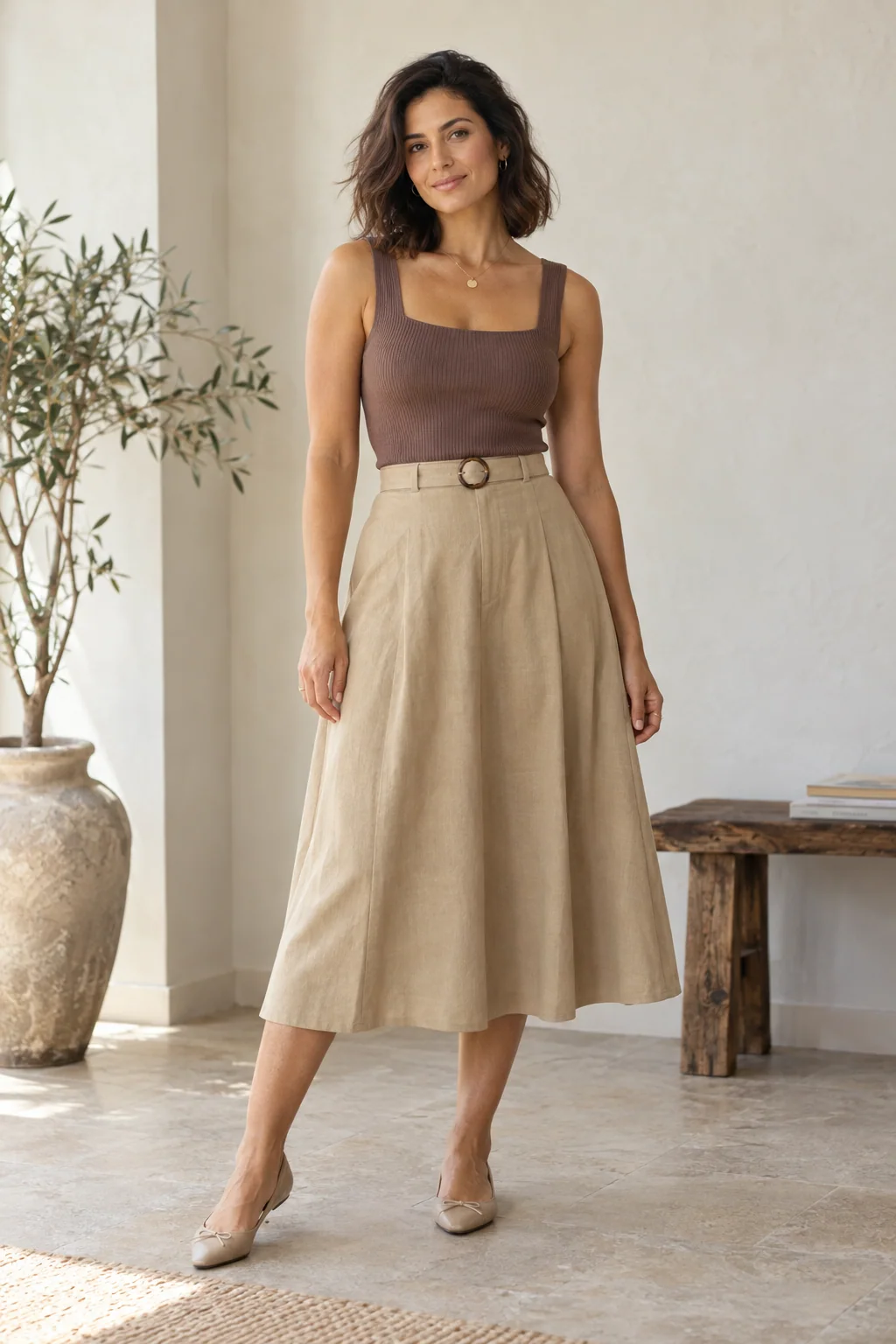
A tucked top and A-line skirt give a visible change of width. Choose it when you enjoy definition, then check that the waistband and lining remain comfortable seated.
A straighter frame
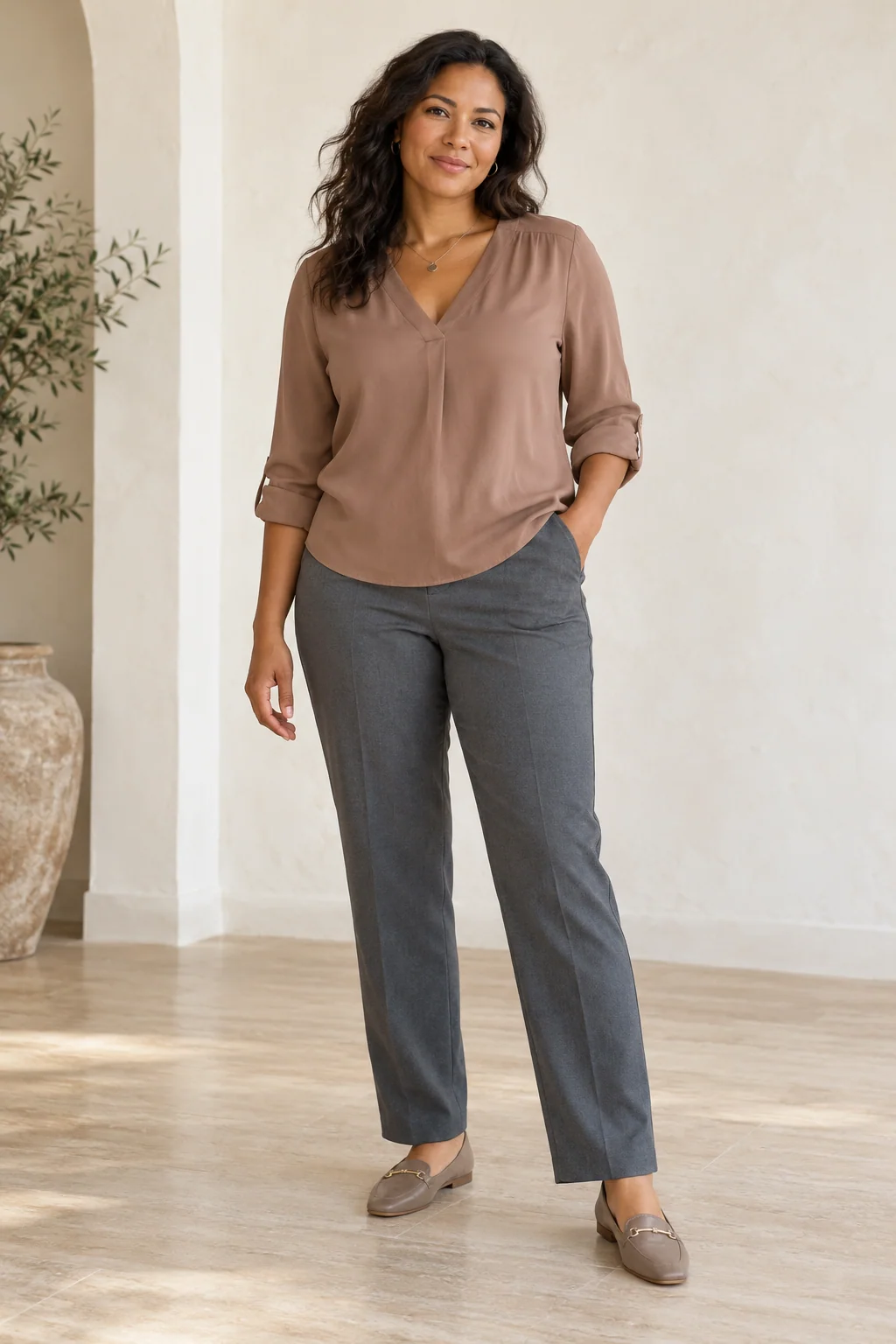
An untucked soft shirt with straight trousers keeps fewer horizontal breaks. Check the front hem and hip ease so the relaxed outline comes from the cut rather than an oversized neckline.
Volume below, open layer above
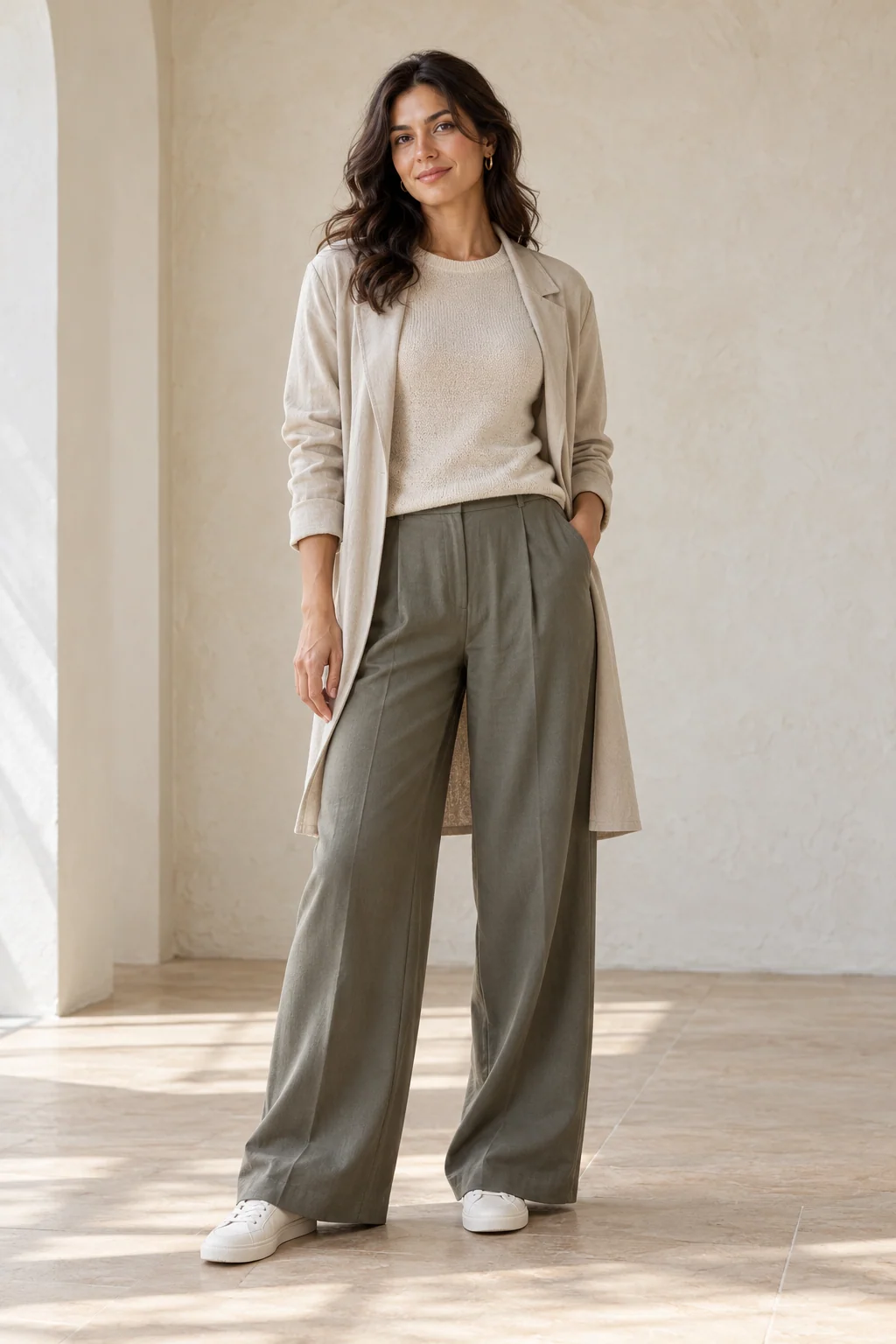
Wide trousers add movement while an open layer frames the inner top. Compare a short jacket and a long one; the hem creates different stopping points.
Explore the question closest to your proportions
Use these labels to navigate, then keep only the advice that matches your fit needs and preferred effect. The focused guides include tops, trousers, skirts, dresses, outerwear, necklines and color examples.
Dress for body type without a dress code
Compare a straight shift, an adjustable wrap and a paneled or fit-and-flare dress. Each places seams and volume differently. Check neckline security, bust and hip ease, the waist seam and the opening for walking before judging the silhouette.
A dress that fits the bust may still pull at the hips; a roomy skirt may come with a loose neckline. Treat those as separate fit zones. A small alteration can help one zone, while several mismatches may call for a different cut.
Use photo advice within its visible limits
A portrait cannot establish waist or leg proportions. MyStyleType’s outfit analysis recommends a full-body photo and marks missing or covered body observations as uncertain. Camera angle, clothing volume and pose still affect the visible outline.
Use the report as a starting point for outfit experiments, then walk, sit and reach in the clothes. It is not an automatic body-measurement service or a replacement for checking garment fit.
Frequently asked questions
Do I need to know my body type to dress well?
No. You can compare fit zones, waist breaks and garment volume directly. Categories can help navigation without becoming dressing rules.
Can a front portrait identify my body shape?
It cannot establish covered waist or leg proportions. Outfit observations need visible evidence, and the tool recommends an optional full-body photo.
Are these guides only for one clothing size?
No. They discuss relationships and fit choices across sizes. Follow the garment’s measurements and your comfort rather than a shape-based size prediction.