OUTFIT / PRACTICAL STYLE
Rectangle body shape outfits: define, layer or keep it straight
If your shoulders, waist and hips look relatively close in width, decide which lines you want your clothes to repeat or change. Creating curves is an option, not a requirement.
The quick answer
Try a tucked knit with wide trousers for a clear waist, a long overshirt with straight pants for an uninterrupted line, or a softly shaped dress. Waist placement, fabric weight and jacket length create different effects even on the same person.
01 / UNDERSTAND & TRY
Three outfit formulas to compare
Compare a defined waist, straight layers and an A-line skirt in these outfit photos. Use the examples to choose a silhouette you would enjoy wearing.
Defined waist, relaxed leg
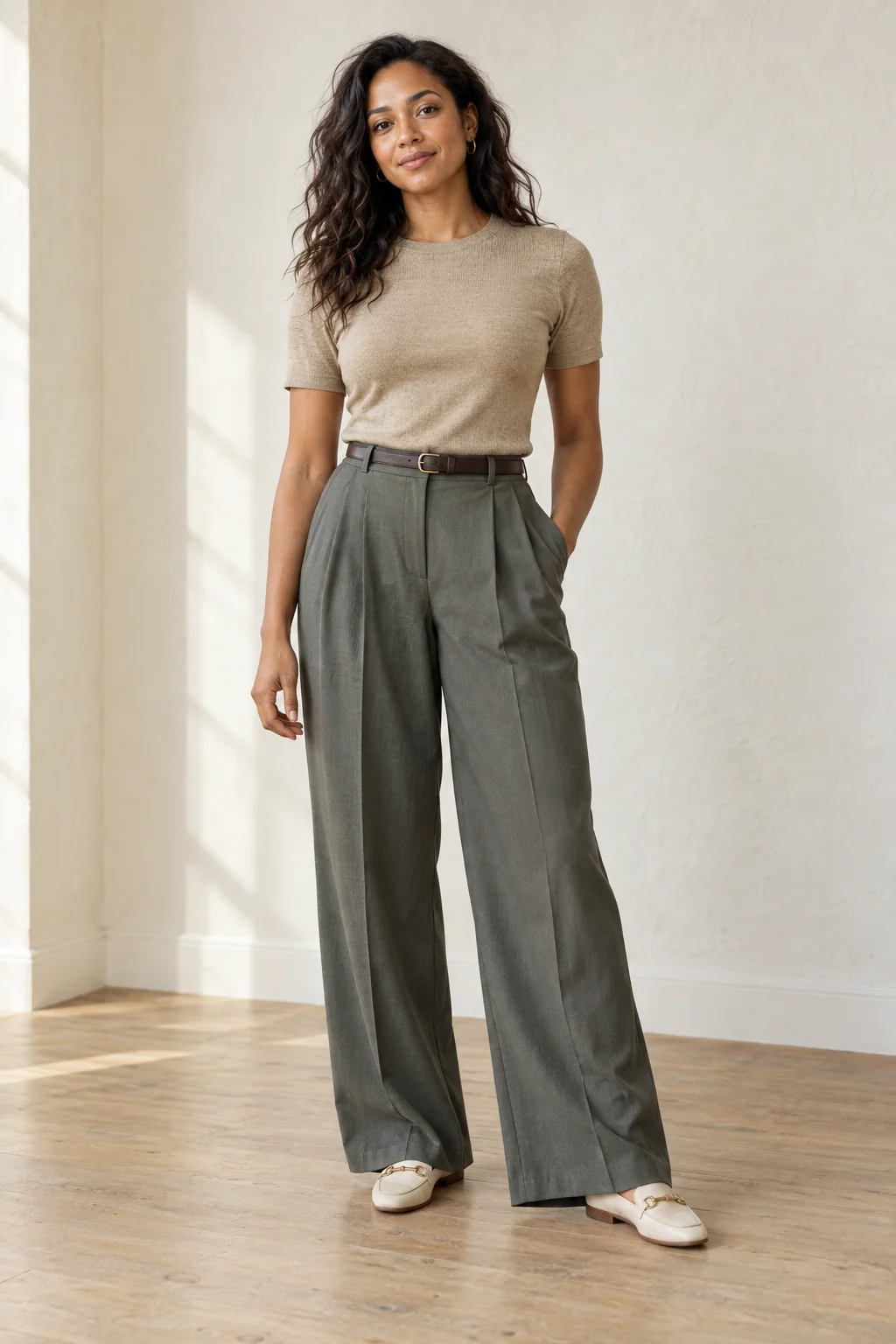
Tuck a fine-gauge crew-neck knit into pleated wide trousers and add a narrow belt. The waistband creates a break while the leg adds width below it. Keep the tuck light if fabric bunches at the front.
Clean vertical layers
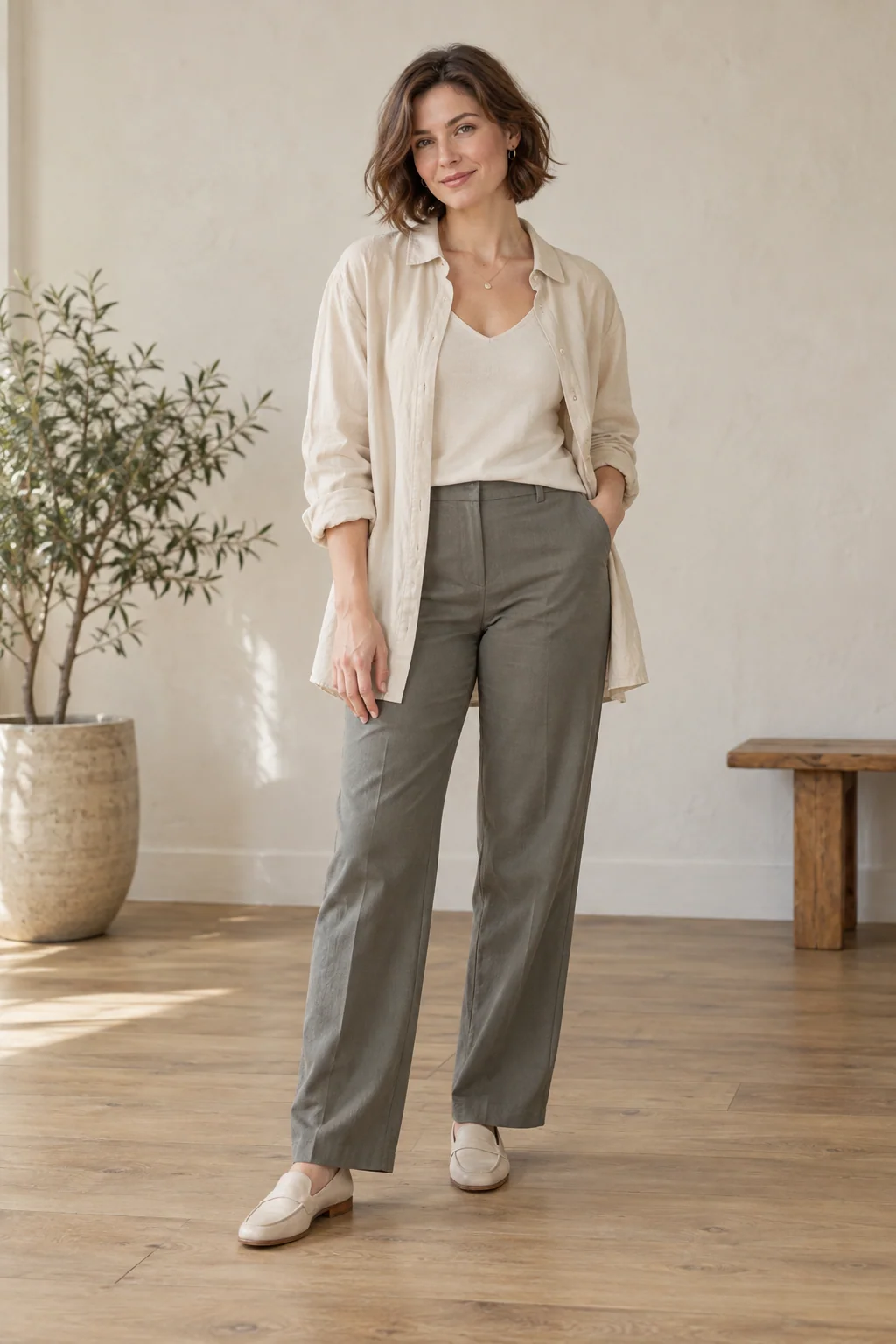
Wear a soft shirt over a simple tank with straight pants. Leave the front open and let the jacket hem pass the waistband. Keep the pants and inner top close in depth if you want the line to read continuously.
Shape through a skirt
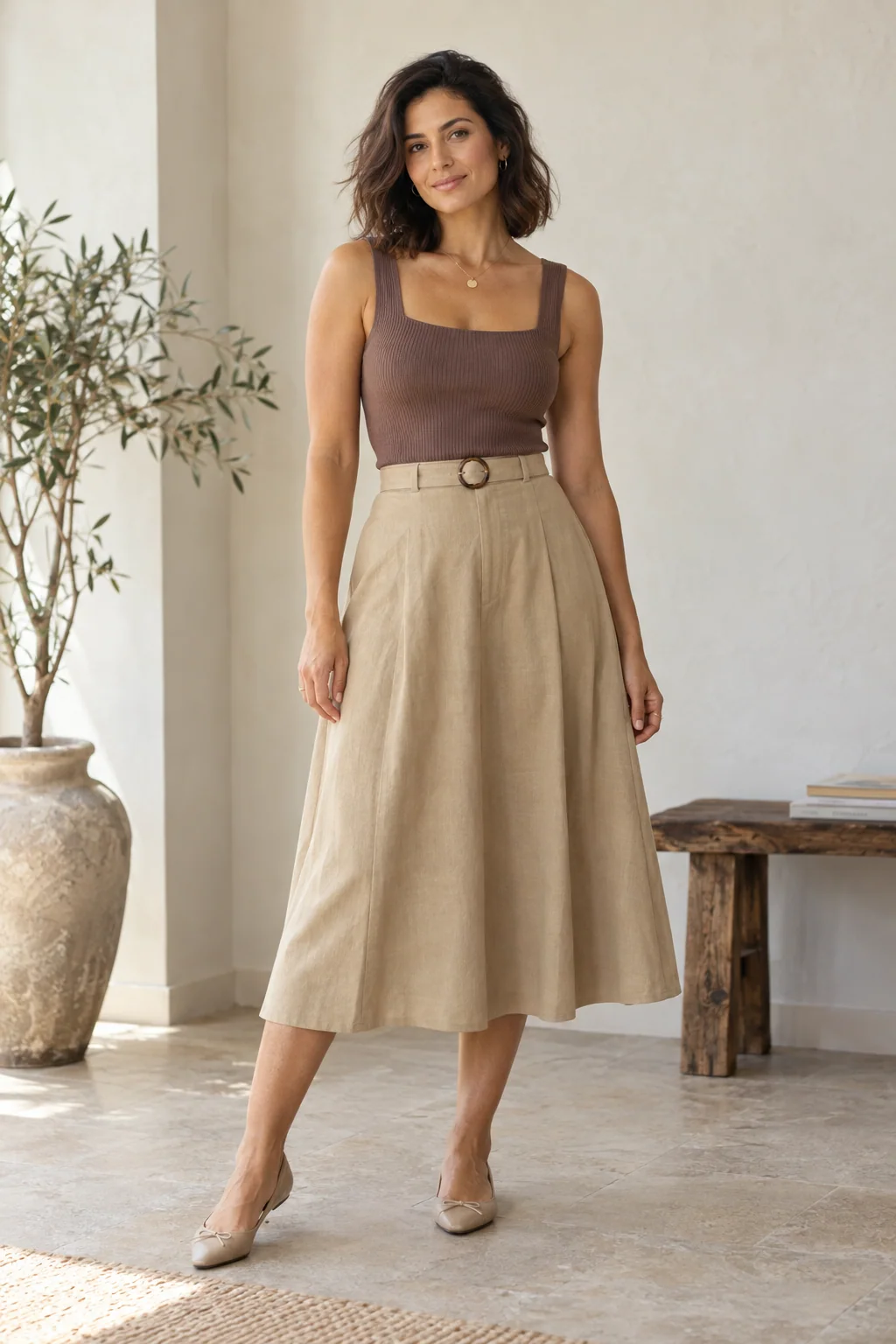
Pair a tucked square-neck top with an A-line midi skirt. The skirt creates a change in width below the waist without requiring a tight top. A softly belted shirt dress offers a one-piece alternative.
02 / UNDERSTAND & TRY
Change one proportion at a time
A high waistband moves the visible break upward; a lower waistband makes the torso read longer. Neither is automatically better. Compare the same trousers with a full tuck, a small front tuck and no tuck before buying a new silhouette.
A cropped jacket ends near the waist and makes that break clearer. A longer unstructured blazer lets you keep a straighter frame. With a belt, check that the fabric forms soft folds rather than pulling the whole garment upward.
03 / UNDERSTAND & TRY
Choose details that support the effect
For more outline variation, compare a square or open V neckline, a sleeve with a little volume and a skirt or trouser that opens below the waist. For a streamlined look, choose a neat crew neck, straight sleeves and a similar-depth top and bottom.
A wrap dress adds an angled line and an adjustable waist; a straight shift dress repeats the overall shape. Check the wrap neckline when bending and choose the finish you prefer rather than assuming one is more flattering.
04 / UNDERSTAND & TRY
Make the outfit work in motion
Sit, raise your arms and walk before deciding. A waistband that shifts, pleats that pull open or a jacket that rides up is a fit issue; it does not mean the shape category is wrong. Choose enough ease for the way you move.
Keep one quiet base color such as stone, navy or olive, then use a contrasting belt or bag only if you want attention at that point. Do not add several competing breaks just because a guide recommends “definition.”
Common questions
Do rectangle shapes need a belt?
No. A belt creates one kind of break. Seams, a tuck or a straight unbroken silhouette are equally valid choices.
Can I wear a straight dress?
Yes. Try its length, neckline and fabric in motion. A straight dress can express exactly the clean line you want.
What if my proportions sit between categories?
Work with the garment decision: where a waist sits, where a jacket ends and how much ease you need. You do not need a final label.
Related reading
YOUR NEXT STEP
Bring the ideas back to your wardrobe
Sign in for a written outfit report from a clear front-facing photo. A full-body photo is recommended; proportions outside the photo remain uncertain.