OUTFIT / PRACTICAL STYLE
Hourglass body shape clothes: fit the bust, waist and hips
When the waist looks smaller relative to the bust and hips, clothes may fit one area and pull or gap in another. The task is comfortable fit, not maximizing definition.
The quick answer
Compare a gently shaped shirt with straight trousers, an adjustable wrap-style outfit, or relaxed layers if you prefer a straighter outline. Fit the fullest area first and consider waist shaping or alteration where needed. A body label does not determine your clothing size.
01 / UNDERSTAND & TRY
Choose definition or a straighter line
See how a shaped shirt, an adjustable wrap and an unbelted layer create different outlines. Use the photos to compare garment structure and color placement.
Shaped shirt, straight leg
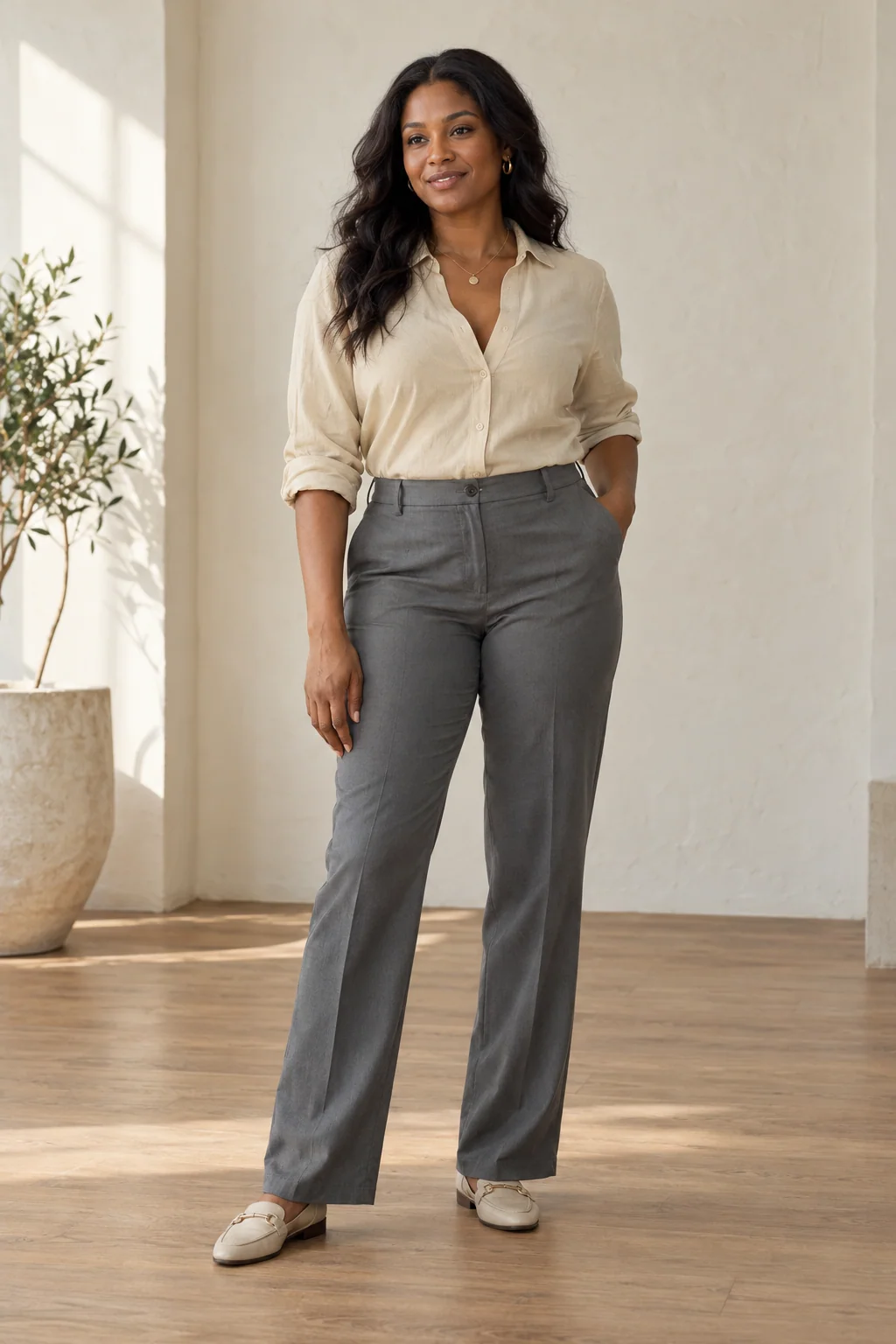
Choose a shirt with room across the bust and shaping through seams or a small tuck. A trouser with a closer waist-to-hip fit can reduce gaping without pulling across the seat.
Adjustable wrap and skirt
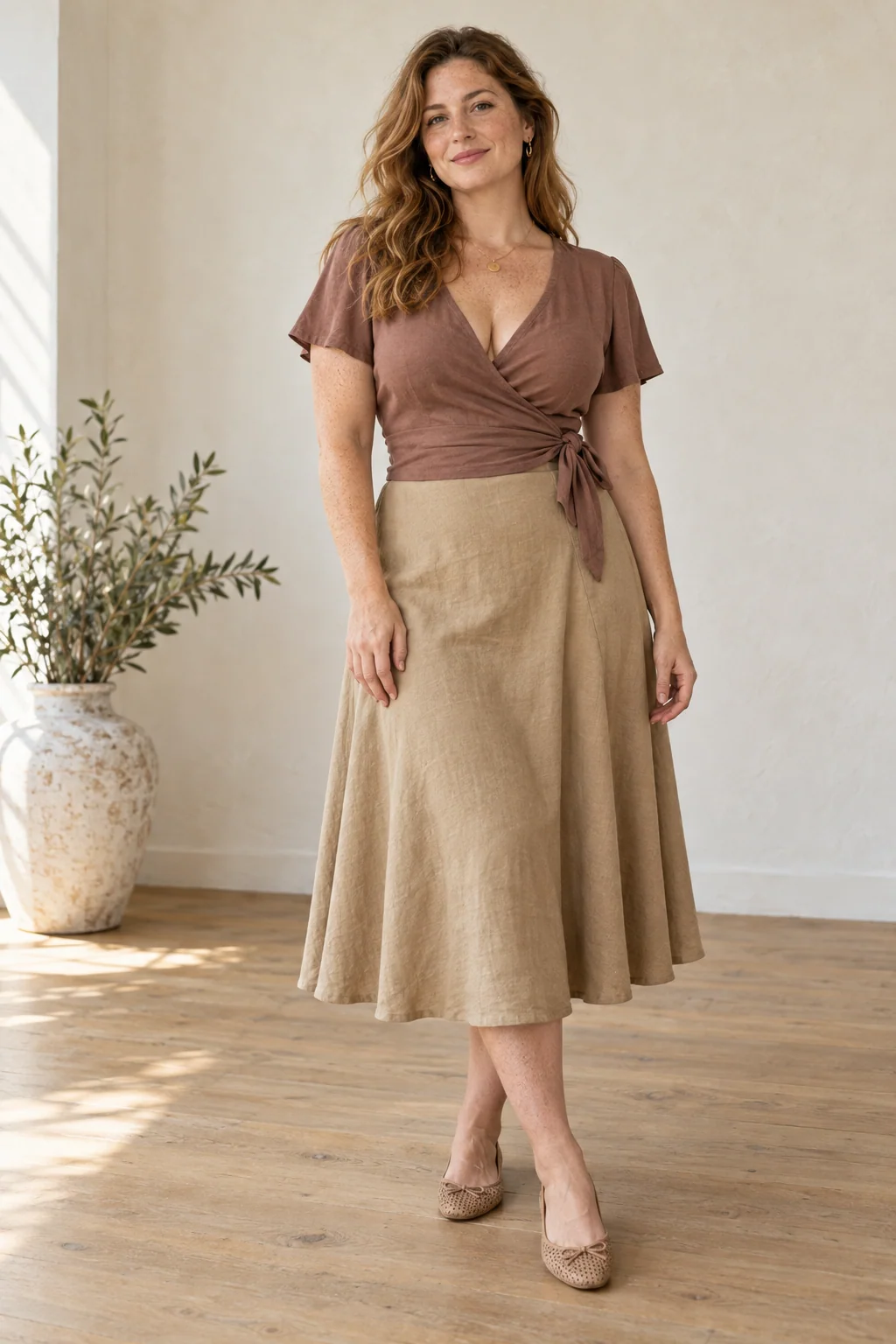
A wrap-style top with an A-line skirt lets you adjust the waist break. Check the neckline and overlap when reaching or bending. Add a camisole or choose a sewn neckline if constant adjustment is distracting.
Relaxed and unbelted
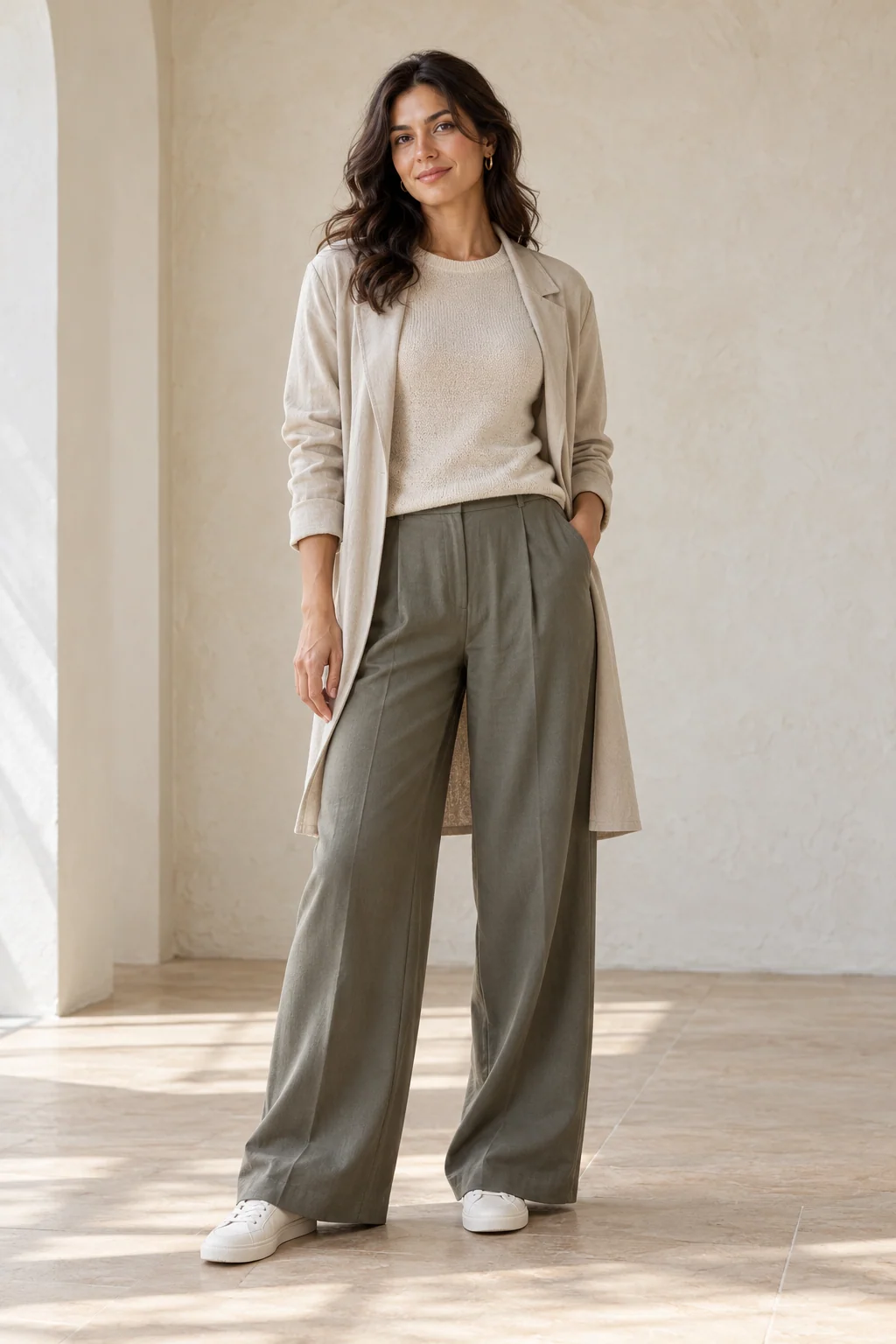
A soft crew-neck top and wide trousers under a straight open jacket keep a less defined frame. You do not need a belt simply because the waist is narrower. Keep enough ease at the hips.
02 / UNDERSTAND & TRY
Check each fit zone independently
For shirts, check the bust first: buttons should not be pulled apart at rest. If the waist is loose, darts or a different cut may work better than sizing down. A shoulder seam and armhole must still allow comfortable movement.
For trousers and skirts, compare the waistband, hip ease and seat separately. A waistband gap does not automatically mean the whole garment is too large. Curved waistbands or a targeted alteration may suit the fit problem.
03 / UNDERSTAND & TRY
Dress and jacket choices
Compare a paneled dress, a wrap dress and a straight shift in the same comfortable size range. One follows the torso more closely; another leaves a freer outline. Test walking and sitting, especially with narrow skirts or rigid waist seams.
For a blazer, check whether it closes without pulling and whether the back stays comfortable with arms forward. A shorter shaped jacket defines a break; a longer straight jacket smooths over it. Choose an open neckline or a crew neck by the style you enjoy, not a prescribed rule.
04 / UNDERSTAND & TRY
Keep the details intentional
A similar-depth top and bottom allows the cut to do most of the work. A contrast belt makes the waist a stronger focus; a tonal belt gives a quieter break. Avoid combining an overly tight waistband with a heavy tuck that adds bulk and pressure.
Before buying, ask whether a small alteration solves one problem or whether several zones need a different pattern. Preserve room to breathe, sit and lift your arms regardless of the silhouette.
Common questions
Must hourglass shapes wear fitted clothes?
No. You can choose a relaxed or straight silhouette. Clothes should fit the areas they touch comfortably even when the outline is loose.
Why do trousers fit my hips but gap at the waist?
The garment may have a different waist-to-hip relationship. Compare another cut, a curved waistband or a waist alteration rather than pulling the hips tighter.
Are wrap dresses always easy to wear?
They offer adjustment but may need attention at the neckline and overlap. Move in one before deciding whether that tradeoff suits your routine.
Related reading
YOUR NEXT STEP
Bring the ideas back to your wardrobe
Sign in for a written outfit report from a clear front-facing photo. A full-body photo is recommended; proportions outside the photo remain uncertain.