MAKEUP / EXPLORE & APPLY
Makeup for olive skin: compare the base before the palette
If nearby foundations repeatedly turn too pink or orange beside your skin, pause the shade hunt and separate depth from hue. Olive is useful descriptive language, not one standard foundation color.
The quick answer
Olive coloring can appear at different skin depths and with different warm or cool preferences. Compare a few close-depth foundation options in person, then test muted and clearer cheek or lip colors with equal coverage. Avoid treating all olive skin as warm or medium-depth.
01 / UNDERSTAND & TRY
Try three color directions without a fixed rule
Compare muted rose, peach-terra tones and taupe with a berry accent in these makeup photos. Test intensity and finish on your own skin; the examples are not product shade matches.
Muted rose and rosewood
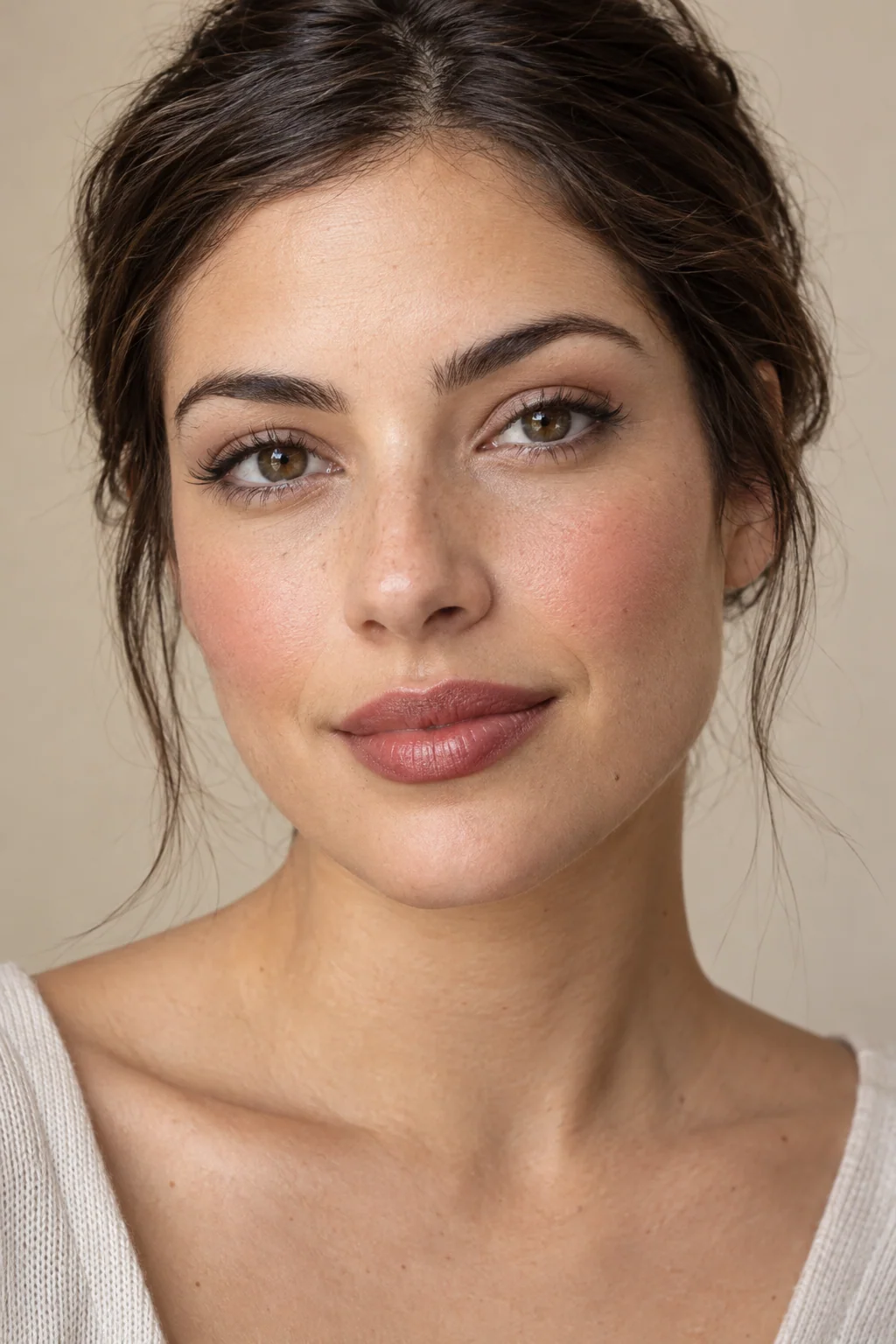
A sheer muted cheek with a slightly deeper lip offers a quiet comparison. If it disappears, increase coverage a little before switching to a completely different hue.
- Muted rose
- Rosewood
Peach and terracotta
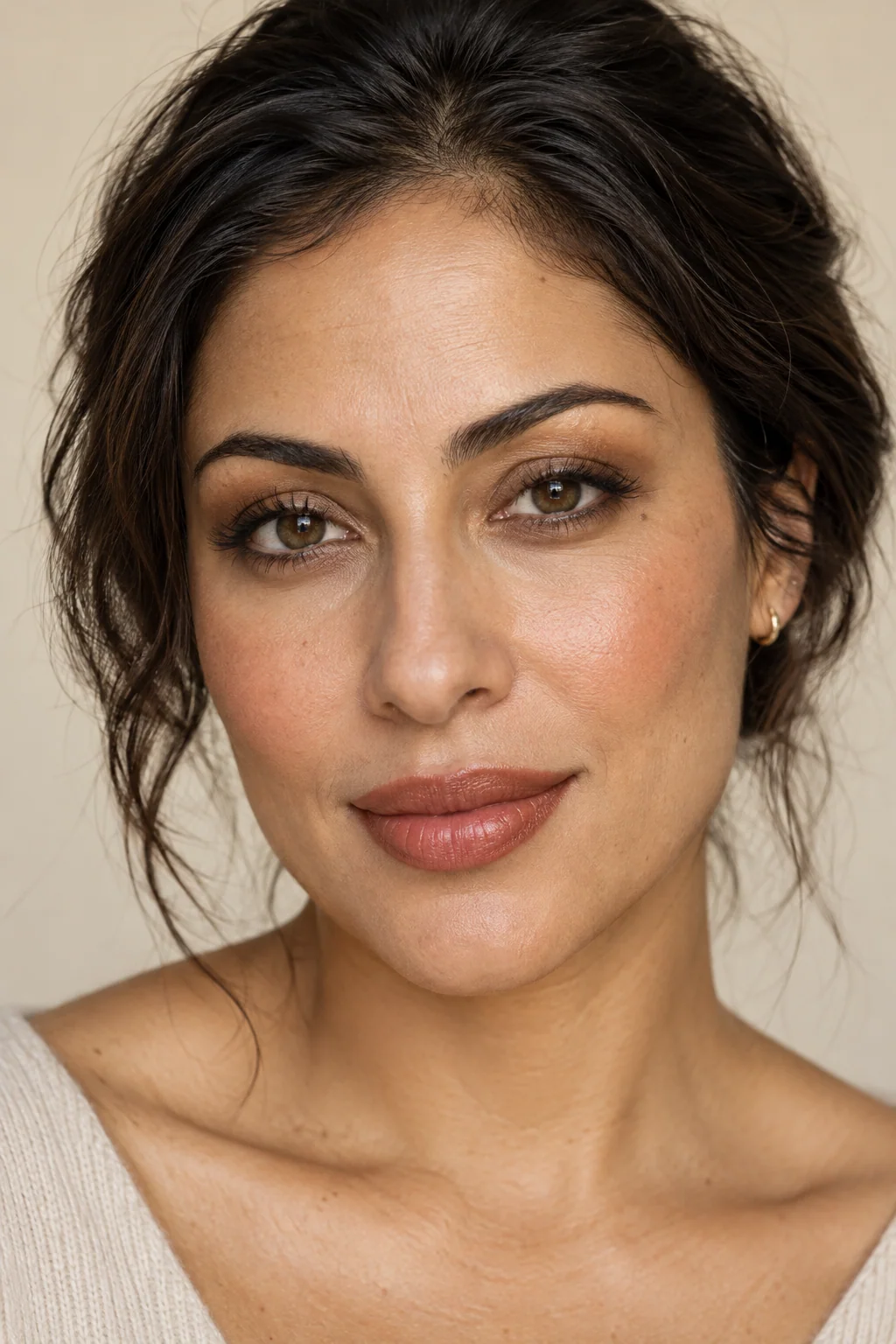
Compare a softer peach cheek with a warm terracotta lip if you enjoy warmth. Use the same base as the cooler comparison so that foundation changes do not influence the decision.
- Soft peach
- Terracotta
Taupe and a berry accent
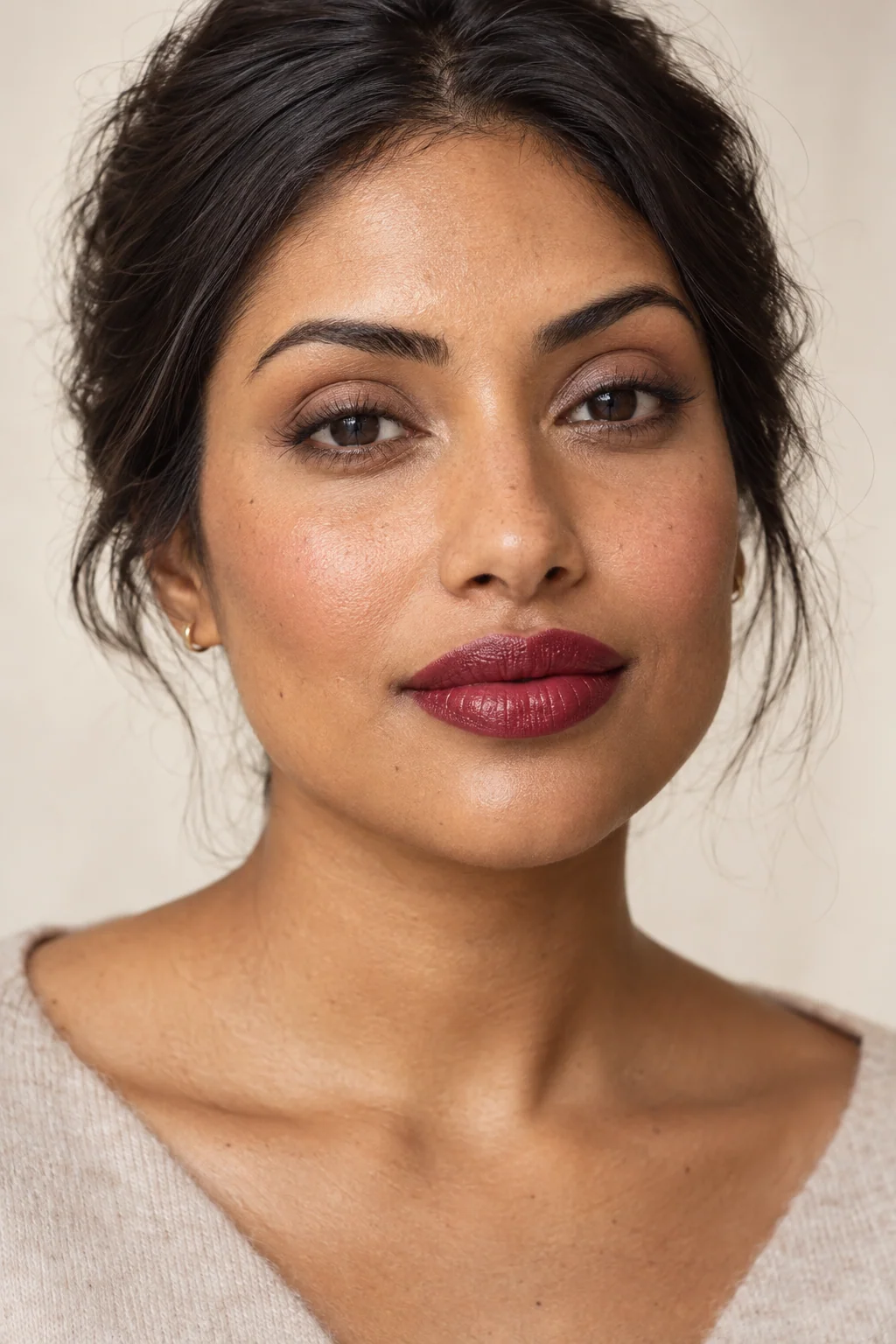
A restrained taupe eye with a berry lip changes both depth and emphasis. Keep the eye soft if you want to judge the lip color first; add more definition later if you like it.
- Taupe
- Berry
Illustrative colors, not product shades, personal analysis or guaranteed results.
02 / UNDERSTAND & TRY
Name the base mismatch precisely
If a foundation is too light, changing only the undertone will not fix the depth. If the depth is close but the edge reads peach or pink, compare a different hue at similar depth. Record the actual mismatch instead of buying successively darker shades.
Terms such as neutral and olive vary across brands. A matching label does not guarantee a matching product. The source below discusses olive makeup terminology and options; its product recommendations do not establish a universal palette.
03 / UNDERSTAND & TRY
Compare products under useful conditions
Test nearby shades in a small clean jaw-to-neck area according to product instructions. Let them settle, then check with a mirror in even daylight and your usual indoor light. Keep coverage and finish comparable. A greenish cast in one phone image is not enough to settle undertone.
Before adding a mixer or corrector, ask whether depth, hue or texture is the actual problem. Do not mix products that are not intended to be mixed or rely on a camera filter to judge a foundation match.
04 / UNDERSTAND & TRY
Build a whole look with one focal point
Use brows that feel connected to your hair contrast, a soft taupe or brown eye, then compare two cheek-and-lip directions from above. If both eyes and lips are strong, decide deliberately whether you want that intensity.
Photo color analysis can suggest broader directions but cannot determine a foundation formula or product sensitivity. Use the makeup report for placement ideas and compare actual products in person. The clothing guide about olive coloring addresses fabrics, not cosmetic shade matching.
Common questions
Is olive skin always warm?
No. Olive describes a color cast in beauty terminology. Compare warm and cool directions rather than assigning one from the label.
Should I add green mixer to every foundation?
No. A depth or finish mismatch needs a different solution, and products may not be designed for mixing. Compare suitable nearby shades first.
Can olive skin wear pink blush?
Yes. Try its intensity, coverage and finish rather than rejecting every pink. A muted rose and a clear pink are different comparisons.
Related reading
YOUR NEXT STEP
Start with your own features
Sign in and submit a clear front-facing photo in even light for written makeup suggestions. Review the photo limitations and test placement and colors in person.