HAIR / A PRACTICAL GUIDE
Haircuts for oval faces: choose by texture and lifestyle
Having several workable lengths can make choosing harder. Use your preferred finish, natural movement and everyday routine to narrow the field.
The quick answer
An oval label does not select a haircut for you. Compare a pixie to expose features, a bob for a clear perimeter, or long layers for movement. If your face looks longer than you prefer, test width or fringe before adding more crown height.
01 / UNDERSTAND & TRY
Choose what the length should do
Start with the feature you want visible: ears and cheekbones, the jaw, or a long flowing outline. These are aesthetic choices, not a ranking of face shapes.
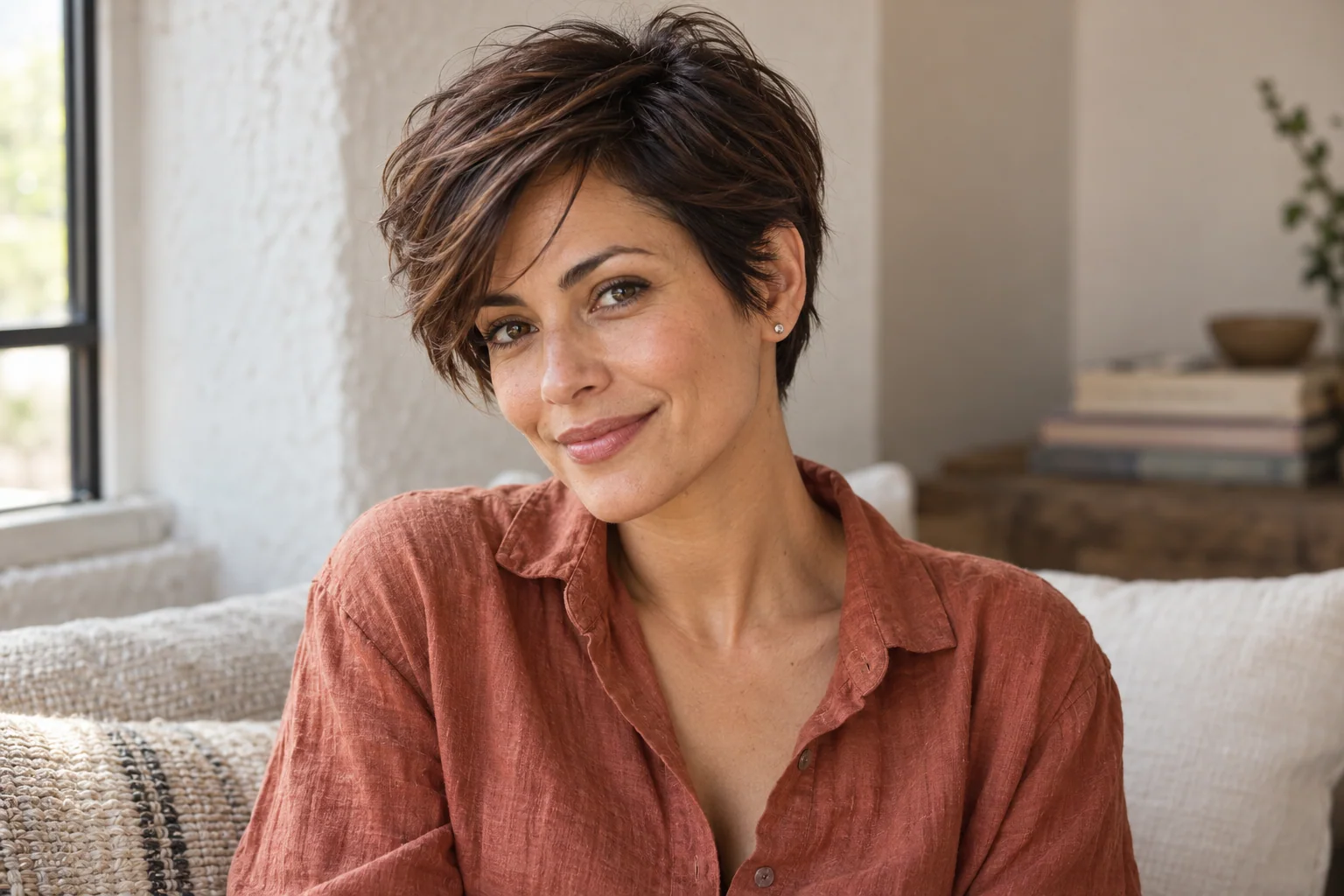
Pixie with a movable top
Good for an open face and a compact outline. Leave enough length to work with the natural growth direction. Expect more frequent reshaping than with long hair.
Jaw-to-neck bob
A defined edge draws attention to its stopping point. A longer front changes that line; a rounded finish adds side volume. Decide whether you want a sleek or naturally waved version before cutting.
Long layers with a retained perimeter
Keep the overall length and add movement around selected areas. Very short crown layers can add height you did not ask for. Fine hair may need fewer layers to preserve full ends.
02 / UNDERSTAND & TRY
Use fringe to change the frame
A fuller fringe reduces how much forehead is visible and creates a strong horizontal line. Long curtain pieces leave more of the center open. Neither is automatically better on an oval face.
Consider glasses, a front cowlick and whether you will style the fringe separately. If you air-dry, ask the stylist to show where the fringe will sit without tension from a brush.
03 / UNDERSTAND & TRY
Match the cut to an ordinary morning
For a wash-and-go goal, bring a photo of your hair after your normal routine. A salon finish can conceal the work required to reproduce it. For a polished bob, discuss how much drying and directional styling you are willing to do.
- Need a ponytail? Confirm the shortest pieces will reach it.
- Prefer volume at the sides? Show the exact area, not just the word “layers.”
- Wear curls and straight styles? Ask how the same cut behaves in both finishes.
04 / UNDERSTAND & TRY
When the face label is not useful
A close selfie, tilted head or hair covering the sides can change the apparent outline. If you fall between oval and another label, compare the actual feature you care about—such as fringe placement or side fullness—rather than trying to settle the category.
Bring two references with similar texture to yours, and tell the stylist which part of each you want. The cut still needs to work with hair density, growth patterns and your preferred finish.
Common questions
Does every haircut suit an oval face?
No shape label guarantees an easy or enjoyable cut. A style may work visually but require more daily effort than you want. Texture and growth patterns still matter.
How can I avoid making my face look longer?
Try fringe, a shorter visible perimeter or volume at the sides. Compare those with a flat-sided style and high crown; keep the proportions you prefer.
Is long hair harder to maintain than a pixie?
They require different work. Long hair needs detangling and drying time; a pixie may need frequent shape maintenance and daily directional styling. Choose the work you are comfortable doing.
Related reading
YOUR NEXT STEP
Start with your own features
Sign in and submit a clear front-facing photo for hairstyle recommendations. Review the written reasons and photo limitations before discussing a cut with your stylist.