HAIR / A PRACTICAL GUIDE
Haircuts for curly hair: plan the shape at its dry length
A curl pattern is useful information, but it is not a complete haircut brief. Decide where you want width, how much length to keep and how you normally wear your curls.
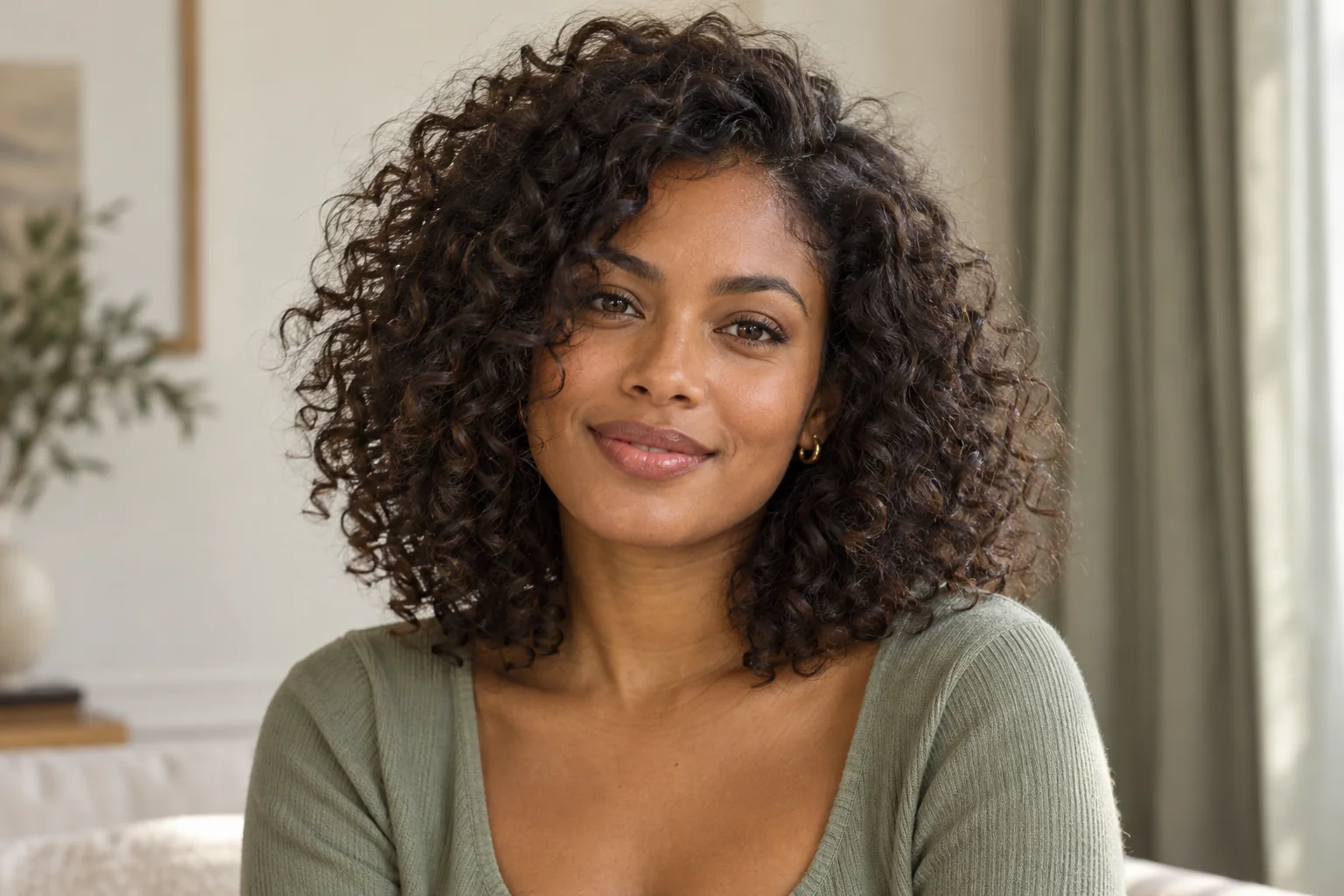
The quick answer
Compare a curly bob for a compact outline, rounded layers for distributed volume, or a tapered cut for more emphasis on top. Assess the length after your usual drying routine: different areas may spring back by different amounts. No single cut suits every curl pattern.
01 / UNDERSTAND & TRY
Pick a shape before a curl label
These drawings indicate the outline and volume distribution, not a particular curl type or a predicted result on your head.
Curly bob
A compact perimeter can feel deliberate and full. Confirm where it sits dry, especially at the front. A one-length outline can concentrate width near the bottom; choose that effect intentionally.
Rounded layers
Distribute movement across the outline instead of leaving all the weight at the bottom. Too-short upper sections can create more crown volume than you want; show the desired side profile.
Tapered curls
Keep more length and visible curl on top, with a closer outline at the sides and nape. This reduces length in those areas but still needs shape maintenance as it grows.
02 / UNDERSTAND & TRY
Consider pattern, density and shrinkage together
Loose waves, ringlets and tighter coils can coexist on one head. Rather than selecting a cut only from a number-and-letter curl label, show how the front, crown and back behave. Note the difference between stretched length and your usual dry length.
If you alternate curls and straight styling, tell your stylist before the cut. A shape balanced in one state may not fall the same way in the other. For fringe, begin with a conservative dry target and discuss its behavior near the eyes.
03 / UNDERSTAND & TRY
Choose a routine that supports the cut
A haircut does not replace conditioning and gentle detangling. The AAD advises detangling curly hair with moisture and conditioner, working in sections, and avoiding dry brushing that can cause breakage and frizz. Adapt products to what your hair actually tolerates.
Bring your normal styling routine to the consultation: air-drying, diffusing, a wash-day set or a stretched style. Ask how the cut will look on later days, not only immediately after styling.
04 / UNDERSTAND & TRY
What to agree before the first cut
Whether a stylist cuts wet, dry or uses both methods, agree on the finished dry length and the routine used to judge it. Do not assume that a dramatic photo has the same density or curl behavior as your hair.
- Show the shortest acceptable front piece with your hair dry.
- Choose the widest point: crown, cheek level, jaw or lower.
- Discuss whether uneven curl patterns need different treatment in different sections.
- Ask what maintenance is needed to keep the outline as it grows.
Common questions
Is a dry cut always better for curly hair?
Not universally. The stylist’s method, your usual finish and the need to evaluate spring-back all matter. Agree on the dry result and ask how it will be checked.
Will layers remove too much curl volume?
They redistribute the outline by changing lengths. Depending on placement, they can expose more lift or reduce bulk in selected areas. Specify the volume you want to keep.
Can a photo reveal my exact curl type?
It shows the state captured under that lighting and routine. Products, stretching and mixed patterns limit what can be inferred; a report should not treat hidden sections as observed.
Related reading
YOUR NEXT STEP
Start with your own features
Sign in and submit a clear front-facing photo for hairstyle recommendations. Review the written reasons and photo limitations before discussing a cut with your stylist.